Menopause Awareness Month 2026 - Food Medicine
How can food support you through the menopause?
Food is fuel. Whether you’re young or old, food is fuel. Aiming to give your body as many nutrients as possible from your diet is always a great place to start.
Supplements are not cheating and they are not wrong. They can be useful when you are unable to get enough of a particular nutrient from your diet, but they should not replace a healthy, balanced diet. For example, there aren't many foods rich in vitamin D so it is recommended that adults consider taking a 10 microgram vitamin D supplement during the autumn and winter months (NHS advice).
So, how can food help with perimenopause and menopause symptoms?
Firstly, understand your triggers
Alcohol, caffeine, spicy foods can be triggers for menopause symptoms (particularly hot flushes) in some people. Everyone is different, and something that triggers a symptom for one person may have no effect on another.
Reducing your intake of these may help reduce the frequency or intensity of symptoms and make them a little more manageable for you. In turn, feeling more comfortable and having a better understanding of your symptoms may help you feel more in control.
It can be useful to keep a diary of the foods and drinks you have, as well as your symptoms and your environment. You may start to notice patterns that help you understand what makes your symptoms worse.
It’s not just about hot flushes, alcohol, caffeine and spicy foods...
Food during perimenopause and menopause isn’t just about managing symptoms and cutting out things completely.
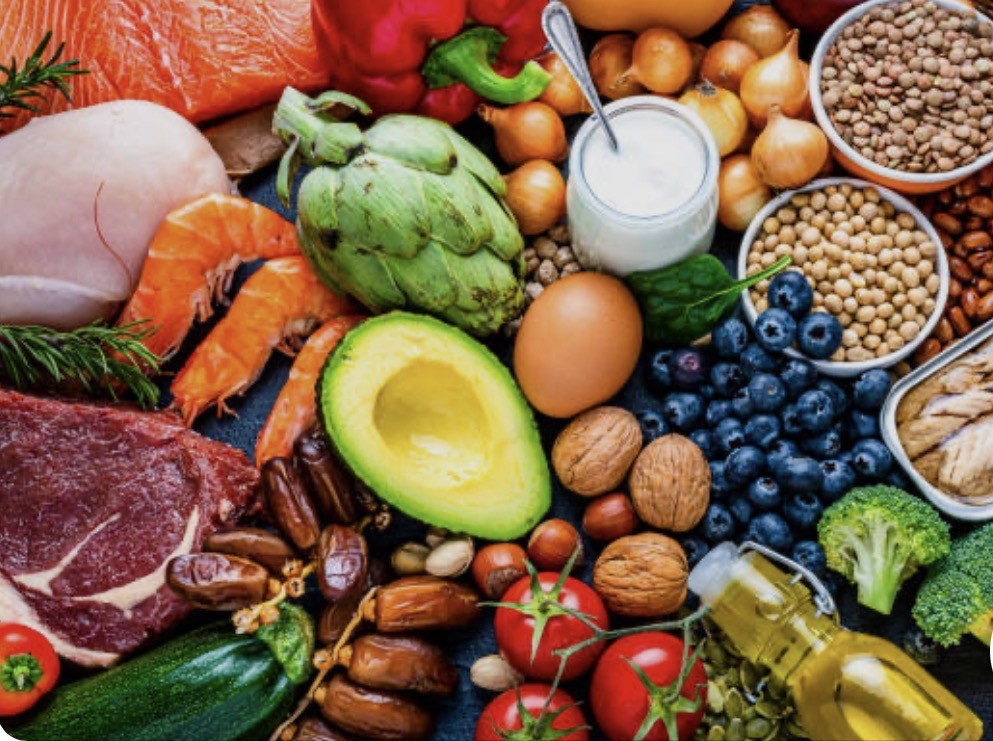
As we get older, looking after our bones, muscles, heart and overall health becomes increasingly important. Eating a varied diet containing plenty of fruit and vegetables, wholegrains and other high-fibre foods, protein, calcium-rich foods and healthy fats can help provide the nutrients your body needs.
Protein is particularly important alongside strength training because it helps support muscle maintenance. Every structure of our bodies needs protein. If we don't get enough during the menopause & advancing age, we become functionally weaker and can become more prone to falls and injuries. Protein also essential to producing hormones, and moving them around the body.
Foods with high protein (list not exhaustive):
- Chicken, Turkey, Lean beef, Salmon, Tuna
- Greek yogurt, Cottage cheese, Tofu, Lentils, Chickpeas, Edamame
- Pumpkin seeds, Almonds, Pistachios, Chia seeds
Fat As we know, there are good fats and bad fats. Whilst a balanced diet may sometimes see us reach for the odd bad fat. Ultimately, we want to limit these. Good fats (unsaturated fats-specifically polyunsaturated), can reduce the risk of heart disease and can also assist with common menopause symptoms such as brain fog and forgetfulness. Omega-3 produces hormones which is important during the menopause as hormones naturally decline. This can also assist with aching and joint stiffness.
Foods rich in unsaturated fat (list not exhaustive):
- Oily fish
- Walnuts, flaxseeds, sunflower seeds
- Tofu, soybeans
Calcium and vitamin D are also important for bone health, which is especially relevant around and after menopause, as the reduction in oestrogen can contribute to bone loss and increase the risk of osteoporosis, where the strength and density of bones reduces.
Foods rich in Calcium (list not exhaustive):
- Milk, Greek & Natural yoghurt, Cottage cheese.
- Calcium-fortified plant milks, Tofu made with calcium sulphate.
- Kale, Broccoli, Pak Choi, Chickpeas, White beans.
- Sardines (with bones), Chia seeds, Almonds.
Foods containing Vitamin D (list not exhaustive):
- Oily fish (salmon, Sardines, Mackerel, Trout, Herring).
- Egg yolks, Mushrooms.
- Liver (not too often).
- Fortified milk & plant milks, Fortified cereals.
This doesn’t mean you need a special “menopause diet”.
It means looking at the food you are already eating and asking yourself: “How can I give my body more of what it needs?”
Remember…
There isn’t one perfect menopause diet and there isn’t one food that will fix everything.
Focus on eating a varied, balanced diet, understand your own triggers and make small changes that you can actually enjoy and maintain.
And most importantly, don’t feel that you have to change everything at once.
This blog is for general information and isn’t intended to replace personalised medical or nutritional advice. If you’re concerned about your symptoms or are considering supplements or significant dietary changes, speak to your GP, menopause specialist or registered dietitian.
Links for further information:
https://themenopausecharity.org/
https://www.nhsinform.scot/menopause
https://www.nhs.uk/conditions/vitamins-and-minerals/vitamin-d/